About Us
The Primary Goals of IYO Foundation are to enhance healthcare, reduce extreme poverty, expand educational Opportunities, increase access to information Technology and promoting Youth and Leadership Development in Nigeria.
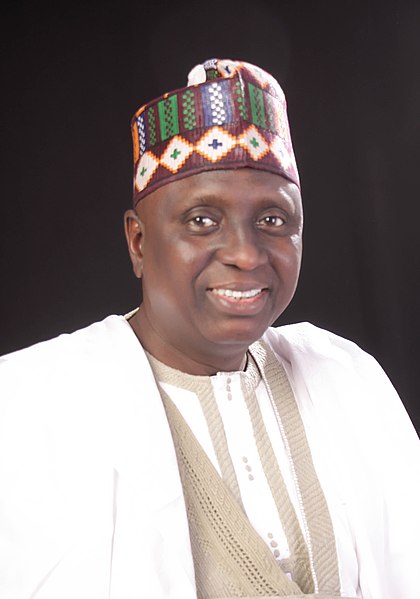

Our Founder
This foundation is created with the vision of a world where everyone is provided with a chance at competing in life.
Dr. Ibrahim Yahaya Oloriegbe
Founder
VISION
A world where everyone is provided with a chance at competing in life
GOALS
The primary goals of the IBRAHIM YAHAYA OLORIEGBE FOUNDATION are to enhance healthcare, reduce extreme poverty, expand educational opportunities, increase access to Information Technology and promoting Youth and Leadership Development in Nigeria.
MISSION
The foundation exists to provide the most vulnerable in the society a chance at competing in the ever demanding and unequal world through provision of access to quality healthcare, provision of social security through education and entrepreneurship driven interventions, promoting good governance through youth and leadership development and creating a baseline of evidence to support all interventions through active engagement in research.
STRATEGIC OBJECTIVES
Ibrahim Yahaya Oloriegbe foundation aims to achieve its mission through basically five main drivers;
1. HealthCare
Women and children have been categorized as a set of the most vulnerable group in the society. Global and National statistics have always reported these group of people as the more likely to loose their life to preventable causes, have limited access to basic services, contribute majorly to maternal and overall death rates. Analysis of reports from the series of National demography health survey showed little or no significance difference has been achieved in the bid to reduce the rate of maternal and child mortality rate in Nigeria. The Nigeria Government in the past years have continued to show increased commitment by increasing the total healthcare expenditure, yet it is still significantly low to the national health needs. Increased active participation of the non-state actors in both global and national health management have been showed to significantly increase the health outcomes.
Ibrahim Yahaya Oloriegbe Foundation aims to contribute to the National health outcomes by targeting the improvement of maternal and child health including special health needs of social interest through advocacy, consultation, shared risk of out-of-pocket health expenses and evidence based interventions that will contribute to key National health targets.
2. EDUCATION
The global goal for education is to ensure inclusive and equitable access to quality education. Education outcomes are multi-sector related and as such been placed as a key tool in bridging the equity gap. Globally accepted publications have reported education to be directly significant to other key development outcomes such as health and economic freedom. Socio-economic factors such as gender, religion, culture and income class have been reported to be leading factors contributing to the rates of out-of-school children. Both global and National surveys have reported Nigeria as the country with very high number of out-of-school children with significant annual increase. Global data analysis also showed that education outcome is improved when investment and outcome risk is jointly shared by both the public and non-state sectors
Ibrahim Yahaya Oloriegbe Foundation aims to contribute to reducing the number of children and youth with no access to equitable learning opportunities. This will be achieved by ensuring that we provide opportunity for equitable access to learning opportunities, improving learning and skills, and improved learning and protection for children in fragile environment through advocacy, consultation, active engagement in shared financial related risk and in-depth community engagement.
3. Entrepreneurship
Health and education have been reported to be directly proportionate to the standard of leaving and economy freedom. Series of global and national survey have consistently reported large share of the populace (almost half) who continue to leave below poverty line in Nigeria with majority falling within the vulnerable group bracket. Economic improvement has multi-sectorial inputs, however capacity building process through interventions such as skills acquisition and various empowerments has been proven to be key tools for economic independence.
Ibrahim Yahaya Oloriegbe Foundation in the bid to ensure continuity of interlinked developmental interventions aimed at achieving individual freedom of choice will develop economic empowerment interventions for the most vulnerable groups in the society. This will be achieved through advocacy, consultation and key strategic interventions.
4. YOUTH AND LEADERSHIP DEVELOPMENT
Roughly, one quarter of the world’s population – 1.8 billion people – is between 10 and 24 years of age. The 2012 National Baseline Youth Survey, undertaken by the National Bureau of Statistics in conjunction with the Federal Ministry of Youth Development, estimated the population of youth aged 15-35 years in Nigeria as 64.1 million, and youth aged 18-35 years as 52.2 million. Females constituted 51.6 percent of youth aged 15 -35 years and 52.8 percent of youth aged 18 - 35 years. Lagos State had the highest percentage of youth (age 18-35 years) in Nigeria (6.3 percent) while Kwara State had the lowest (1.3 percent) in 2012.
Youths are agents of political change, the powerhouse of the industrial world, the brain of the computer world. Without capacity, being young is not an asset for leadership. Accountable leadership remains one of the biggest challenges of development in Africa. Leaders in Nigeria have not always responded effectively to the needs of the country, but there is hope in the rising generation of youth who could play a critical role in building transparency and accountability for successful economic transformation, representation, and public service.
For young people to be as effective as possible in their leadership roles, their capacity need to be meaningfully built. It takes time and resources to build the capacity of young people meaningfully, and familiar barriers exist at every stage: lack of trust and resources, systematic exclusion of minorities and marginalized young people, and weak systems including organizational structures that do not effectively include young people. With the right policies and investments, vibrant emerging nations like Nigeria can harness the potential of this new generation to bring prosperity; ensuring young people stay healthy, complete their education and pursue their dreams. If we fail these young people, this historic opportunity will be squandered. There will be more poverty, inequality and unemployment.
It is against this backdrop, the Ibrahim Yahaya Oloriegbe Foundation seeks to meaningfully engage and build the capacity of young people in the country. Thus, uniquely positioning them to be effective leaders. Now, more than any other time, young people have the opportunity to take action to lead the country for – good governance, transparency and accountability, universal health coverage, quality education etc. and contributing to public and private service delivery.
5. Research
When interventions are planned and implemented based on evidence based data, improvement, innovations and outcome are significantly increased. In order to ensure our vision of providing a chance at life for the most vulnerable attains significant impact, all drivers of our strategic objectives will be guided, planned and implemented utilizing evidence based data from research works. We will broaden our research scope to cover both operational and social researches.
The Operational research will be co-lead with other key institutions in a bid to improve our interventions towards achieving the set goals of the organization. Considering that social issues contributes significantly to the outcome of key organizational goals on health, education and empowerment, Ibrahim Yahaya Oloriegbe Foundation will be conducting social researches in the bid to utilize the research outcomes in advocacy and consultation.
Want more details?
Click the download to download the document with full details of our foundation
Download